
In 2026, the cost of web design in Australia varies widely depending on several factors, including the designer’s location, whether you hire a freelancer or an agency, the scope of the project, and the level of technical expertise required.
A small business looking for a straightforward website will have very different requirements compared to a growing company that needs a custom platform, advanced functionality, or eCommerce capabilities. Understanding what drives web design pricing helps you avoid surprises and make better long-term decisions.
As a general benchmark, a medium-sized Australian agency like Digitalzoop, which focuses on tailored, conversion-driven websites, typically charges between $8,000 and $20,000. This reflects the level of custom design, technical planning, user experience work, SEO foundations, and post-launch support involved in building a high-quality site that supports real business goals.
However, the upfront cost is only part of the picture.
Hidden Costs of Website Design You Should Know About
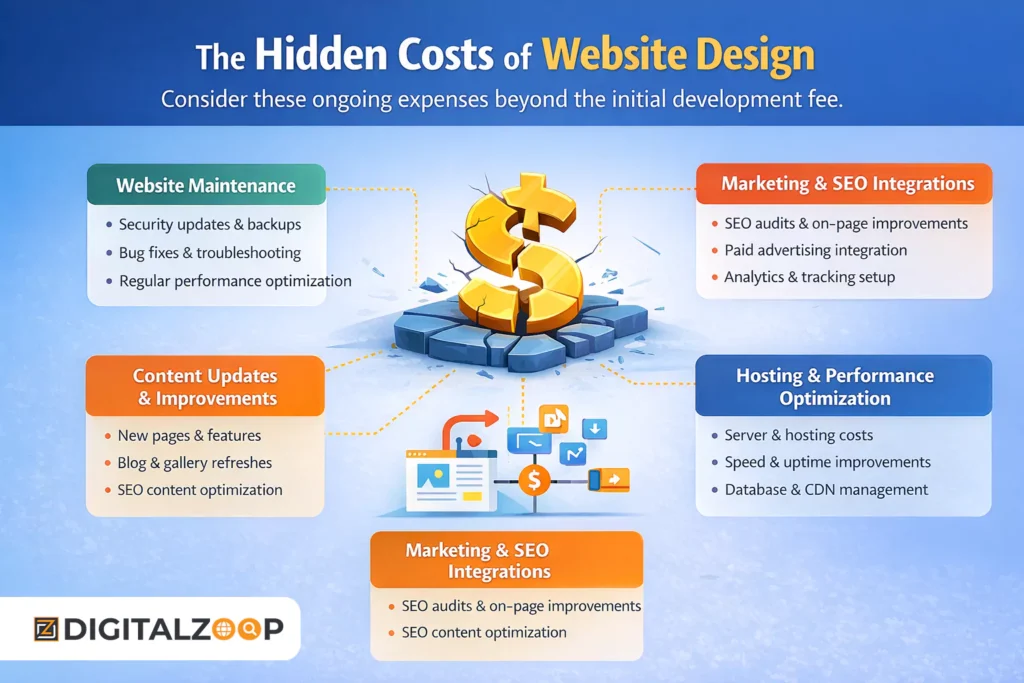
Many businesses underestimate the true cost of a website by focusing only on the initial build.
Beyond the design and development fee, you should factor in:
- Ongoing website maintenance
- Security updates and backups
- Content updates and improvements
- Hosting and performance optimisation
- Marketing and SEO integrations
Choosing the cheapest option can often lead to poor build quality, technical shortcuts, or limited scalability. These issues usually surface after launch, forcing businesses to spend more on fixes, rebuilds, or migrations.
A poorly designed website can also damage brand trust, reduce conversions, and limit visibility in search engines. In the long run, investing in a reputable agency often costs less than fixing problems caused by a rushed or low-quality build.
Scope and Complexity of a Website
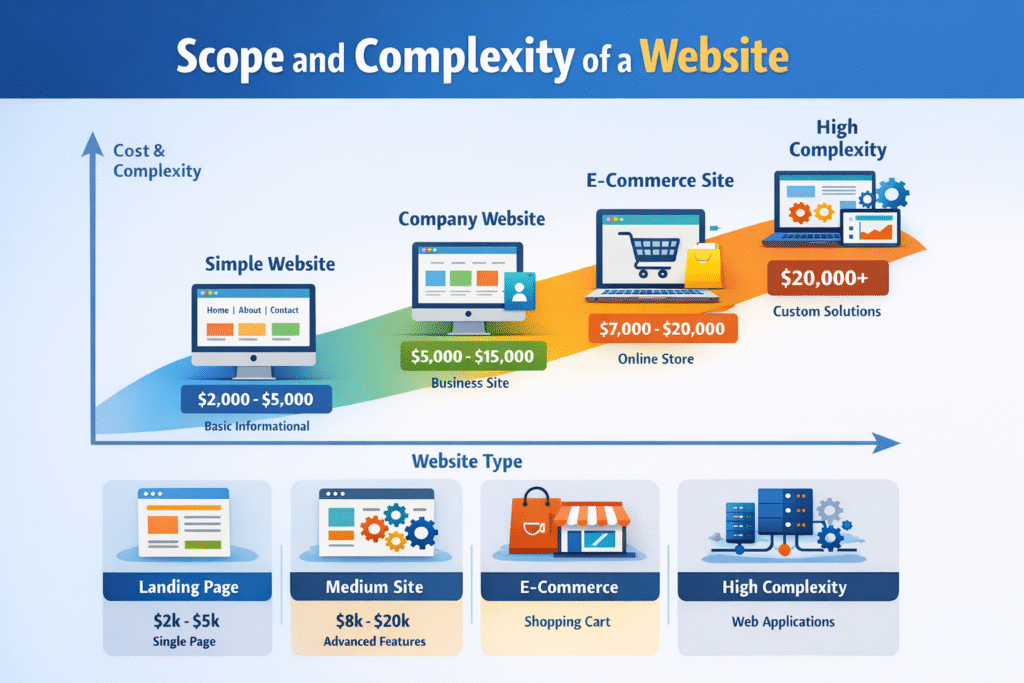
The scope and complexity of your website are the biggest factors influencing cost. Below is a clear breakdown of common website types and what you can expect to pay in Australia.
Simple Websites
A simple website usually includes a small number of pages such as:
- Home
- About
- Contact
- Blog or gallery
These sites are ideal for sole traders, local service providers, or small businesses that only need to communicate essential information.
Features are basic and may include contact forms, standard plugins, and light SEO setup. Because development time is short, these sites sit at the lower end of the price range. Costs can increase slightly if you want strong UI and UX design or SEO best practices built in from day one.
Medium Complexity Websites
Medium complexity websites include additional features such as:
- Custom-designed layouts
- E-commerce functionality
- CRM or third-party integrations
- Advanced forms or booking systems
If you are running an online store, secure payments, product databases, and intuitive navigation all increase complexity. These projects require more planning, development time, and testing.
In Australia, medium complexity websites typically cost $8,000 to $20,000, depending on customisation and design depth.
High Complexity Websites
High complexity websites are built for scale.
These projects often involve:
- Custom web applications
- Advanced content management systems
- User portals or dashboards
- Bespoke workflows and automation
- High security requirements
Large businesses, marketplaces, and platforms with unique user journeys fall into this category. Because these builds require specialist expertise and ongoing support, they represent the highest investment level.
Single Landing Page Websites
A single landing page website usually costs $2,000 to $5,000.
This option works for short-term campaigns or businesses that need a basic online presence quickly. While affordable, a single page limits how much information you can present and often struggles to support long-term SEO or conversion goals.
Simple Company Websites
A standard company website with 5 to 10 pages generally costs between $5,000 and $15,000.
These sites include pages like Home, About, Services, and Contact, providing a professional overview of your business. They are well suited to small and medium businesses that need credibility and clarity without complex functionality.
E-commerce Websites
E-commerce websites in Australia typically range from $7,000 to $20,000.
Costs depend on:
- Number of products
- Payment gateway setup
- Inventory management
- Shipping rules
- User experience design
Online stores require more testing, security, and performance optimisation, which increases development time and cost.
The Impact of Custom Web Development Charges
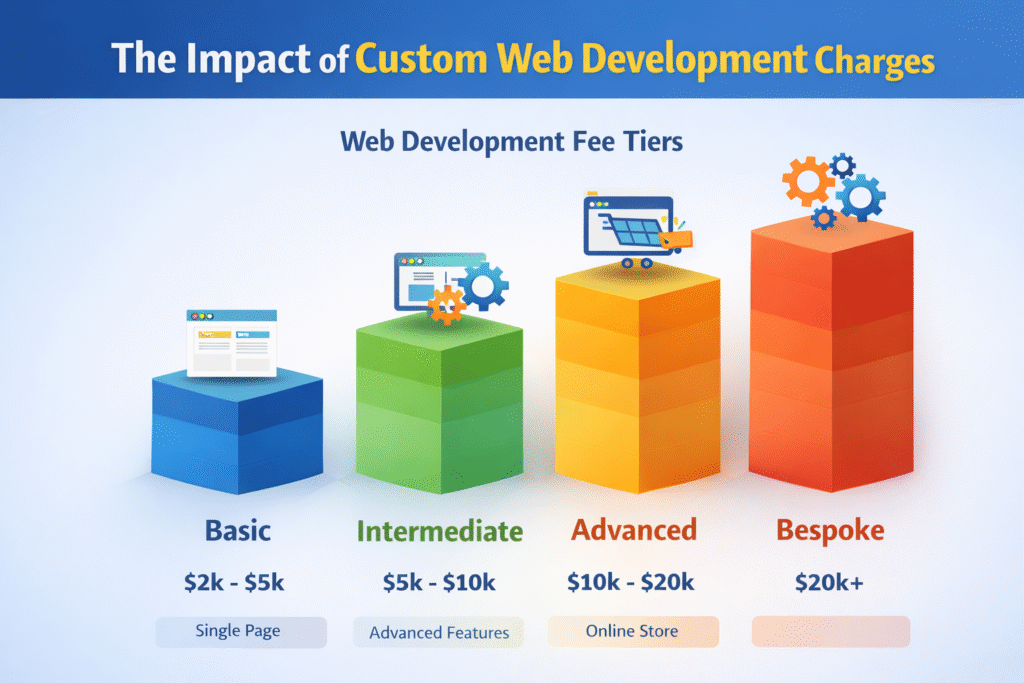
Custom development significantly influences website pricing. The more tailored your requirements, the higher the development cost.
Complex builds such as customer portals, integrations, or advanced e-commerce workflows require experienced developers, not just designers.
Many businesses discover too late that their “website designer” lacks the technical skills to build or maintain complex functionality. This often leads to hiring additional developers mid-project, increasing costs and delays.
Choosing an agency like Digitalzoop that handles both design and development reduces this risk and keeps accountability in one place.
Choosing the Right CMS
Your content management system affects both cost and long-term usability.
If you hire a web design agency or freelancer, they should clearly explain which CMS they recommend and why. Each platform has different limitations, costs, and scalability considerations.
WordPress
WordPress remains the most widely used CMS, powering over 43% of websites globally and holding more than 60% market share among CMS-based sites.
Positives
- Highly customisable with thousands of plugins and themes
- Strong SEO capabilities
- Large global support community
Negatives
- Requires regular updates and security management
- Advanced customisation often needs a developer
Shopify
Shopify is purpose-built for e-commerce and is popular with online retailers.
Positives
- Easy product and payment management
- Beginner-friendly
- Reliable 24/7 support
Negatives
- Limited customisation without development
- Ongoing monthly fees from $29+
- Additional transaction fees in some cases
Drag-and-Drop Platforms (Wix and Squarespace)
Wix and Squarespace appeal to users who want simplicity and speed.
Positives
- Easy to use
- Hosting and security included
Negatives
- Limited scalability
- Customisation restrictions
- Monthly fees that add up over time
Freelancer vs Agency Website Design Costs
Choosing between a freelancer and an agency depends on your needs, risk tolerance, and budget.
The Expertise Gap
Freelancers often specialise in one area, such as design or development. This can work for small projects but creates gaps for SEO, UX, performance, or security.
Agencies bring multidisciplinary teams, reducing blind spots and improving overall build quality. Freelancers can offer a personal touch, but vetting experience and reliability is essential.
The Fulfilment Gap
Large agencies may suffer from slow turnaround times due to volume and overheads.
A specialist agency like Digitalzoop, focused specifically on web design and development, often provides a better balance of expertise, accountability, and attention.
Offshore Website Design Costs
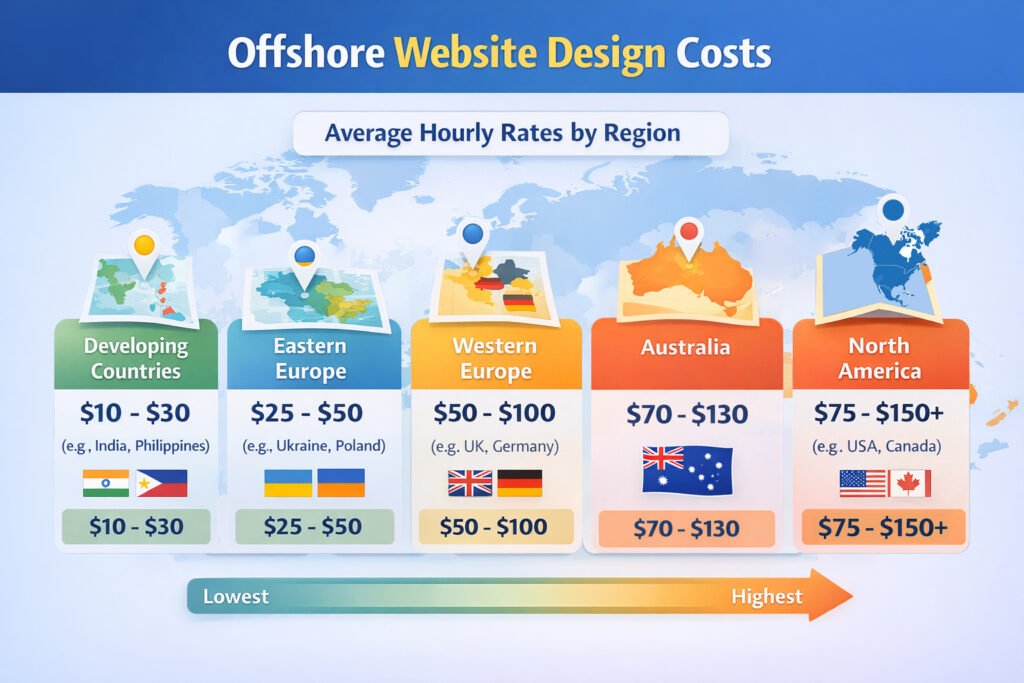
Offshore development can reduce upfront costs, but it introduces risks such as communication barriers, time zone delays, and inconsistent quality.
Approximate hourly rates:
- Developing countries: $10–$30
- Eastern Europe: $25–$50
- Western Europe: $50–$100
- North America: $75–$150+
- Australia: $70–$130
Lower cost does not always mean better value. Rework, delays, and misalignment often offset initial savings.
Monthly Website Costs
Websites also come with ongoing expenses.
DIY Platforms
- Wix: ~$16–$45 per month
- Squarespace: ~$16–$65 per month
WordPress
- Hosting: $5–$50+ per month
- Optional maintenance services
Website Maintenance Costs
Ongoing maintenance may include:
- Plugin and core updates
- Security monitoring
- Performance optimisation
- Bug fixes
Many businesses choose a maintenance plan to ensure stability and security.
Website Design Costs for Small Businesses
Small businesses typically spend $5,000 to $15,000 on website design, depending on needs.
Additional considerations include:
- Hosting choice
- Content updates
- SEO and digital marketing investment
SEO services often range from $1,500 to $10,000 per month, depending on competition and growth goals.
Frequently Asked Questions
How much does website design cost in Australia in 2026?
In 2026, website design in Australia typically costs between $5,000 and $20,000, depending on the site’s size, complexity, custom features, and whether you hire a freelancer or a professional web design agency. High-end custom or eCommerce websites can exceed this range.
Why are Australian web design costs higher than offshore options?
Australian web design costs are higher due to local labour rates, higher living costs, stronger compliance standards, and deeper expertise in UX, SEO, accessibility, and performance. Local agencies also offer better communication, accountability, and long-term support compared to many offshore providers.
What hidden costs should I expect after a website is built?
Beyond the initial build, common ongoing costs include website maintenance, security updates, hosting, performance optimisation, content updates, and SEO or marketing integrations. These costs are often overlooked but are essential for keeping a website secure and effective.
Is it cheaper to hire a freelancer or a web design agency?
Freelancers are usually cheaper upfront, but agencies often provide better long-term value through access to designers, developers, UX specialists, and SEO professionals. For complex or business-critical websites, agencies reduce the risk of rework, delays, and technical issues.
When should I choose custom web development instead of a template?
Custom web development is the better choice when your business needs unique functionality, scalability, integrations, or a tailored user experience. Template sites work for basic needs, but they often limit growth, performance, and SEO as your business expands.


