
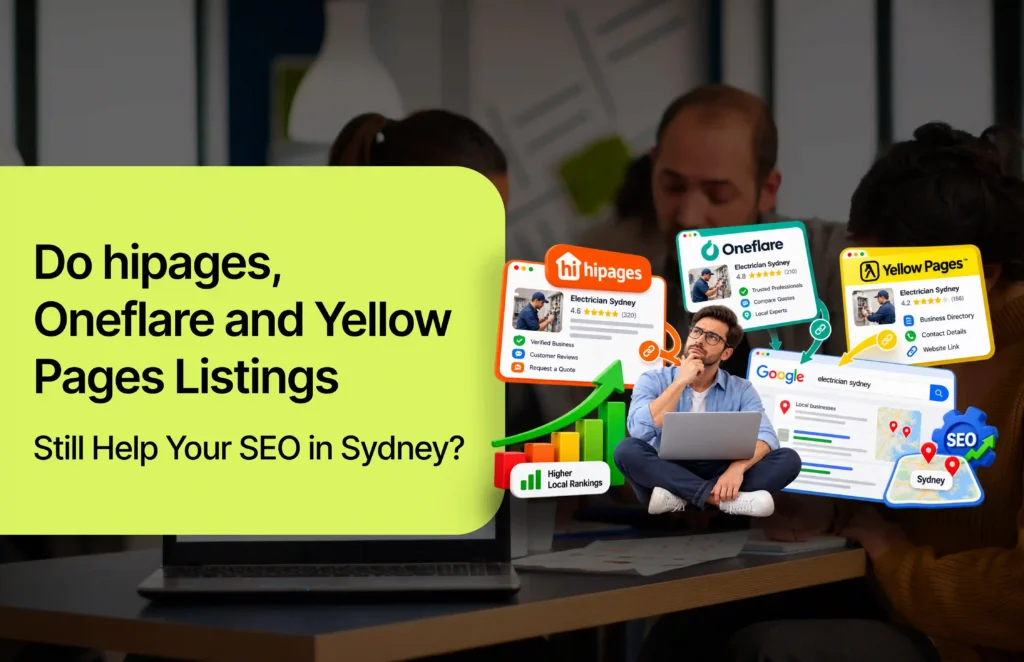
The short answer has three parts, because "directories" bundles three different things. Consistent listings on quality Australian directories still help your local SEO as citations, a foundational trust layer that confirms your business details, though their ranking power is modest and tops out after a couple of dozen good ones. The backlinks from those listings move almost nothing. And lead platforms like Hipages are advertising products, not SEO: their value is the leads you pay for, and their SEO contribution is roughly one citation's worth.
Before anything else, an update that makes most articles on this topic out of date: Oneflare no longer exists. The platform was retired on 30 June 2026 and its website now redirects to Airtasker. If part of your online presence lived on Oneflare, you have cleanup to do, and the closure itself teaches the most important lesson in this article. The Digitalzoop team manages citations and listings as part of local campaigns across Sydney, so here is the honest 2026 picture: what citations actually do, which business directories Australia-wide deserve your time, whether Hipages earns its fees, and the 90-minute cleanup that fixes most listing problems for good.
The Oneflare Lesson: You Were Building on Rented Land
Thousands of Australian businesses spent years accumulating reviews, profile history and job records on Oneflare. On 30 June 2026, all of it stopped being a storefront and became a redirect. The reviews do not transfer into your Google profile, the profile page that may have ranked for your name is gone, and any citation value the listing carried is dissolving as the pages disappear.
If you were listed there, do three things this week: remove or update any mention of Oneflare on your own website, check whether your old listing created inconsistencies that live on in data aggregators, and make sure the reviews you earn from now on land somewhere you control the relationship with, starting with your Google Business Profile. The broader lesson shapes everything below: directories and platforms are useful supplements to an online presence you own, and dangerous substitutes for one.
Three Things People Mean by "Directories"
Most confusion about whether directories are good for SEO comes from mixing three categories:
Citation sources are online business directories whose job is simply listing your name, address and phone number, called NAP in the trade. True Local, Yellow Pages, Hotfrog, StartLocal. Their value is the citation itself: third-party confirmation that your business is real, located where you claim, and reachable as stated.
Link sources are directories pitched on the backlink their listing provides. This is where the sales emails about "500 high-authority directory submissions" live, and where most of the wasted money goes.
Lead platforms are marketplaces that sell you customer enquiries: hipages and ServiceSeeking for trades, HealthEngine and HotDoc for healthcare, and until this year, Oneflare. A listing there is a citation as a side effect, but you are buying advertising, and it should be judged as advertising.
Each category gets a different verdict, so let's take them in order.
Do Citations Help SEO? The Honest 2026 Answer
Yes, as a foundation rather than a lever. Local citations SEO works because Google cross-references your business details across the web before trusting them: a business whose name, address and phone number match everywhere reads as established and legitimate, while mismatched details, old addresses and three different phone numbers read as unreliable, and that doubt leaks into map pack rankings. Citations will not catapult you past a competitor, but inconsistent ones will quietly hold you under one. Proximity still outweighs any listing, which is why a business can rank strongly in one suburb and vanish in the next, as we explain in why a business ranks in Parramatta but not Penrith.
Two properties follow from that. Consistency beats volume: twenty accurate listings on established Australian sites outperform a hundred sloppy ones on junk directories, and the hundredth listing adds nothing the twentieth did not. And the work is front-loaded: build the core set once, audit it yearly, and move on. Anyone selling you ongoing monthly "citation building" after the foundation exists is billing you for maintenance that takes an hour.
There is also a newer reason citations matter more than their ranking weight suggests. AI assistants recommending local businesses retrieve from exactly these sources, cross-checking details the same way Google does, and we showed in our piece on Sydney customers asking AI for recommendations that entity consistency is a prerequisite for being named in those answers. Your citation footprint is no longer just a Google signal. It is the reference library every answering machine checks.
Are Directory Backlinks Good for SEO?
Barely, and the industry has known it for years. Most directory links are tagged in ways that pass little or no authority; Google long ago discounted easily acquired links, and mass submissions to low-quality directories sit somewhere between useless and mildly harmful. The link farms that email you weekly belong in the bin. We made the fuller argument in why backlinks are overrated for Sydney rankings, and directories are the purest case: claim quality listings for the citation, treat any link as a rounding error, and spend the saved budget on your own suburb pages and reviews, which move rankings in ways no directory ever will.
Is Hipages Worth It? Judge It as Advertising
The question businesses actually mean here is commercial, so answer it commercially. Hipages sells leads: homeowners post jobs, the platform distributes them to subscribed tradies, several businesses compete to quote each one, and you pay through subscription and lead costs whether or not you win the work. For a new business with empty capacity and no organic presence yet, that trade can make sense as a gap-filler: real jobs, fast, at a knowable cost. For an established business, it tends to age badly, because shared leads force price competition, costs rise with volume, and every dollar builds the platform's brand rather than yours. Run the same maths we apply to every paid channel: total monthly cost divided by jobs actually won, compared against what the same money produces elsewhere.
As for SEO, strip the mystique: a hipages profile contributes one decent citation and, in some trades, a profile page that can rank for your business name. Here is the uncomfortable Sydney reality behind that: search your own trade plus suburb and Hipages itself likely holds a first-page position, built on the collective presence of businesses like yours. Being listed puts you inside a result that outranks you, which is worth something. Building your own suburb pages, profile and reviews, the full playbook from our guide on how Sydney tradies rank in suburbs without an office, is what eventually makes the platform optional. The healthiest relationship with lead platforms is a planned exit: use them while your owned presence grows, then let them go.
What About Yellow Pages and the Classic Directories?
Yellow Pages remains active, established and worth claiming, along with the handful of genuine Australian staples. The free listing delivers the citation value. The upsells rarely deliver anything beyond it: paid premium placements on legacy directories are display advertising on websites most consumers no longer browse, and they should be judged on the traffic they demonstrably send, which for most Sydney businesses is close to none. Claim free, decline the premium pitch unless the referral numbers in your analytics argue otherwise.
The Best Business Directories Australia-Wide: A Priority List
For businesses asking which business listing sites Australia offers are worth the time, this is the order we work in:
Tier one, non-negotiable: Google Business Profile, which is a citation, a rankings engine and your review home in one, and so far ahead of everything else that getting it professionally right through proper Google Business Profile management matters more than every other listing combined. Then Bing Places and Apple Business Connect, which cover the other two map ecosystems for free.
Tier two, the Australian core: Yellow Pages, True Local, White Pages, Localsearch, Hotfrog, StartLocal and Yelp Australia, plus ProductReview if reviews matter in your industry. Claim each, match your details exactly to your Google profile, add photos where allowed.
Tier three, your industry's own: hipages or ServiceSeeking for trades if the lead economics stack up, HealthEngine and HotDoc for health, your state Law Society directory for legal, TripAdvisor and OpenTable for hospitality, and your industry association's member directory, which is often the single best listing outside tier one because it carries genuine trust and a real editorial link.
Past those twenty-odd, stop. Local business directories beyond the established set add risk without reward.
The 90-Minute Citation Cleanup
Run this once and your citation layer is handled for the year: search your business name plus phone number and list every site that mentions you. Note every variation in your name, address or number, including old addresses and the Oneflare ghost if you had one. Fix tier one and two listings to match your Google profile exactly, character for character. Claim whichever core directories are missing. Diarise the same check twelve months out. That is the whole discipline, and it is why citation work belongs inside a broader local SEO program rather than being sold as one.
Where Directories Sit in the Bigger Picture
Keep the proportions honest. Citations are the plumbing: necessary, invisible when right, damaging when wrong, and finished quickly. The signals that actually move Sydney rankings in 2026 are a complete and active Google profile, steady reviews, genuine suburb pages and content that answers what customers ask. A business with perfect citations and nothing else ranks nowhere. A business with strong fundamentals and merely tidy citations wins its suburbs.
Digitalzoop builds local campaigns in exactly that proportion for businesses across Greater Sydney: the citation foundation set once and audited, the effort concentrated where rankings are actually decided, itemised deliverables, reporting on enquiries rather than listing counts, no lock-in contracts, and direct access to the senior team doing the work. If your listings are a mess of old addresses and dead platforms, or you are paying monthly for directory submissions that finished being useful years ago, talk to us, and we will show you what your citation footprint looks like and what actually deserves the budget.
Frequently Asked Questions
Do citations help SEO in 2026?
Yes, as a foundation. Consistent name, address and phone details across quality directories build the trust that supports map pack rankings, and AI assistants cross-check the same sources. Their power is modest and tops out after roughly twenty good listings.
Is hipages worth it for Sydney tradies?
As advertising, sometimes: it suits new businesses with spare capacity while their own presence grows, but shared leads and rising costs age badly. As SEO, it contributes about one citation. Judge it on cost per job won, not ranking promises.
What happened to Oneflare?
Oneflare was retired on 30 June 2026 and its website now redirects to Airtasker. Reviews and profiles there do not transfer to Google, so businesses that relied on it should update their listings and redirect future review requests to platforms they control.
How many directories should an Australian business list on?
Around twenty to twenty-five: the map platforms, the established Australian directories like Yellow Pages and True Local, and a handful of industry-specific sites. Beyond that, extra listings add no ranking value and increase the risk of inconsistent details.
Are paid directory listings worth it?
Rarely for SEO. The citation value comes with the free listing, and premium placements are display ads judged by the referral traffic they send, which for most businesses is minimal. Lead platform subscriptions are a separate advertising decision.